Repeat internal transport
Runs that happen many times a day between the same two points can move to a vehicle that follows the same route each time.
A mobile robot system moves totes, trolleys, and pallets between production, storage, and dispatch on a route that repeats. The right system is planned around the route, the load, the floor, and the people who work in the same aisles.
Each system type has its own page. Start with the movement you want to take off the floor, then review what the system includes and whether it fits your site.
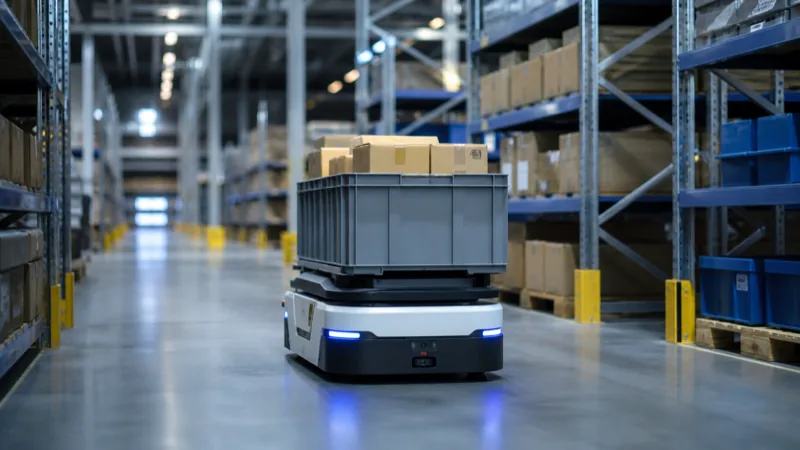
Carries totes, trays, or a trolley between fixed points on a mapped route.
Tows carts or moves a pallet-sized load over longer runs.
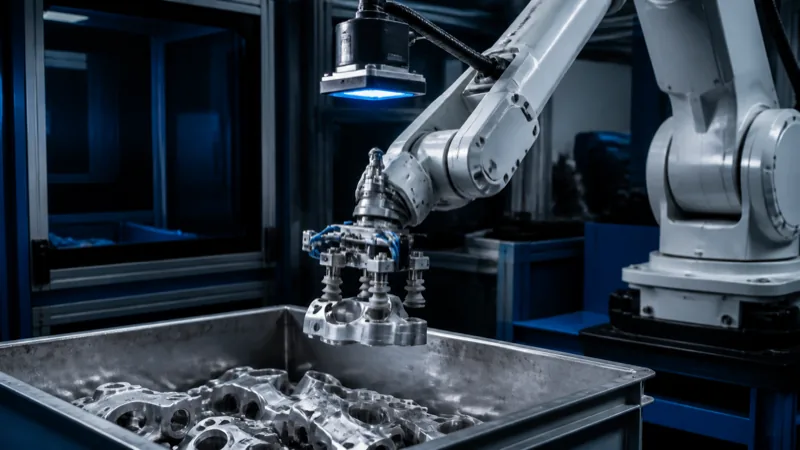
Stages and presents work so pickers stay in one area.
Mobile robots are useful when the same movement happens many times a day. The system follows a mapped route and arrives at the same points every run.
Runs that happen many times a day between the same two points can move to a vehicle that follows the same route each time.
When transport is scheduled rather than fitted around other work, the next stage waits for parts less often.
Long walking routes and heavy trolley work move into a planned, powered workflow with defined stopping points.
A vehicle on its own is not a system. The route, the load handling, the traffic rules, and the hand-off at each end are all part of the scope.
The vehicle and its top module, tow hitch, or lifting method are selected around the load and how it is presented and collected.
The site is mapped, routes and stopping points are defined, and the rules for aisles, junctions, doors, and charging are set before the system runs live.
Signals to and from the areas served, safety assessment for shared aisles, call and status points, and a clear way to recover a stopped vehicle.
These are the applications this category covers and the industries they are used in. Find the row closest to your operation before opening a system page.
| Industry | Applications covered in this category |
|---|---|
| Warehousing and logistics | Warehouse picking, goods sorting, parcel handling, tote handling, order fulfilment, automated storage and retrieval, intralogistics automation |
| Food and beverage | Case packing, tray and tote movement, and the hand-off into food palletizing |
| Automotive components | Engine component handling, tyre handling, and line-side material transport between press, machining, and assembly |
| Metal fabrication | Material transport between cutting, welding, and finishing areas |
| Electronics | PCB and tote handling between production and test stations |
| Pharmaceutical and healthcare | Cleanroom material handling and sample handling |
The return comes from the work you move into the system, not from the robot. Start with the repeat hours and what they cost you today.
Count how many times the route is walked or driven in a shift, and how long each run takes including waiting and searching.
Mapping, charging positions, load handling, safety assessment, network coverage, and any floor work belong in the figure.
Uru Robotics has not published a calculator for this category. The welding-cell page has a labour-capacity calculator you can use as a planning model, with the limitations noted there.
View the calculatorSome of this work is better left alone, or fixed a different way. It is worth ruling these out before scoping a system.
If the move is a few metres between two benches, a conveyor or a change in layout is simpler and cheaper than a vehicle.
If pick-up and drop-off points move week to week, the mapping and traffic rules need reworking each time.
Blocked aisles, uneven surfaces, and mixed forklift traffic have to be resolved first. A robot does not fix a congested floor; it has to live with it.
The first review should focus on the work, not on an assumed robot model.
An autonomous mobile robot is a powered vehicle that moves a load between points on a site. It navigates using an onboard map and sensors rather than following a fixed physical track, so the route can be changed in software.
An AGV follows a fixed guide path such as magnetic tape or a wire in the floor. An AMR plans its own path within a mapped area and can route around an obstruction. An AGV can be the simpler choice where the route is permanent and the traffic is light.
A route that repeats every shift, has a stable pick-up and drop-off point, and runs on a floor clear and level enough for a vehicle to use safely.
It depends on the site. Floor condition, aisle width, door and lift access, network coverage, and charging locations all need review before a route can be committed to.
We start with the movement you want to improve. From there we decide whether a closer review of the route, load, floor, and daily volume is useful.
These sit next to this category in most factories.
Compare AMR and AGV approaches through the route, load hand-off, traffic, floor, and operating workflow.
Use your production figures to explore a simple planning estimate.
Find out whether warehouse automation and AMRs are right for your operation.